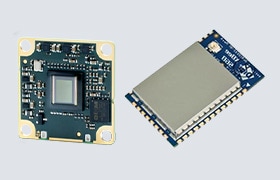
EVM3901-QW-00A

Monolithic Power Systems (MPS)
946-EVM3901-QW-00A
EVM3901-QW-00A

Mfr.:

Description:
Power Management IC Development Tools 60V, 1A, Synchronous Buck Power Module with an Integrated Inductor Evaluation Board, AEC-Q100 Qualified

Lifecycle:
New Product:
New from this manufacturer.

In Stock: 8

Stock:
8 Can Dispatch Immediately
Factory Lead Time:
32 Weeks Estimated factory production time for quantities greater than shown.
Minimum: 1   Multiples: 1
Unit Price:
$-.--
Ext. Price:
$-.--
Est. Tariff:
This Product Ships FREE

Pricing (NZD)

Qty. Unit Price
Ext. Price
$95.05 $95.05

Product Attribute Attribute Value Select Attribute
Monolithic Power Systems (MPS)
Product Category: Power Management IC Development Tools
Evaluation Boards
Voltage Regulator - Switching Regulator
MPM3901
MPM3901
Brand: Monolithic Power Systems (MPS)
For Use With: Buck Power Module
Product Type: Power Management IC Development Tools
Qualification: AEC-Q100
Factory Pack Quantity: 1
Subcategory: Development Tools
Products found:
To show similar products, select at least one checkbox
Select at least one checkbox above to show similar products in this category.
Attributes selected: 0

CAHTS:
9030820000
USHTS:
9030820000
KRHTS:
9030820000
TARIC:
9030820000
MXHTS:
9030820100
ECCN:
EAR99

EVM3901-QW-00A Evaluation Board

Monolithic Power Systems (MPS) EVM3901-QW-00A Evaluation Board is designed to demonstrate the capabilities of the MPM3901-AEC1 fully integrated, fixed-frequency, synchronous step-down power module. This MPS evaluation board supports a wide input voltage range from 4.5V to 60V, accommodating various step-down applications in 12V and 24V automotive battery environments. The board delivers up to 1A of continuous output current with peak current control for an excellent transient response. The MPM3901-AEC1 power modules feature built-in power MOSFETs and an integrated inductor, ensuring a compact and efficient design. Additionally, the modules employ advanced asynchronous modulation (AAM) mode to achieve high efficiency under light-load conditions by reducing switching and gate driver losses.